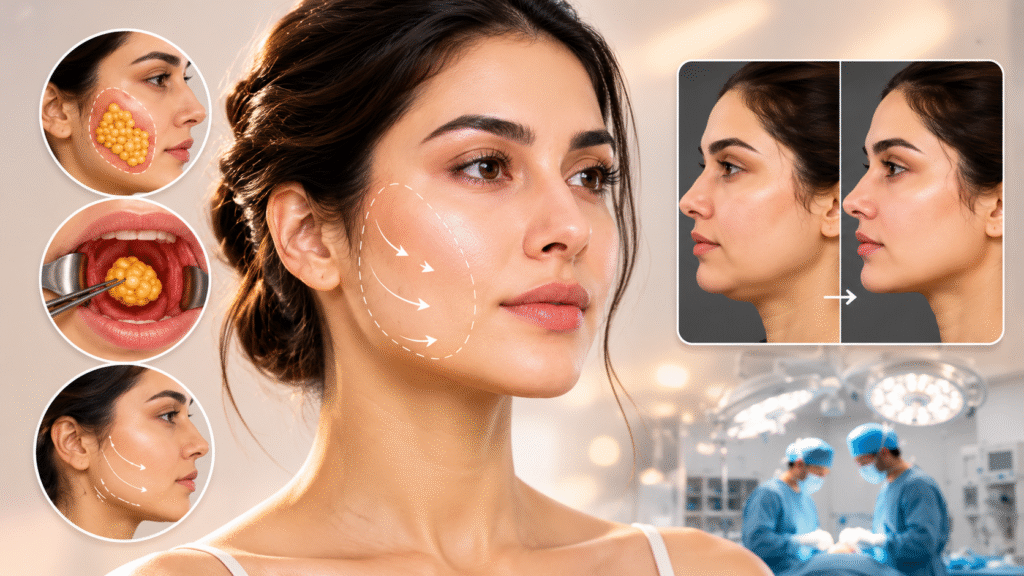
Buccal fat removal recovery is usually quiet and slow. Most people have swelling and a sore mouth at first, then see the shape of the face settle over time.
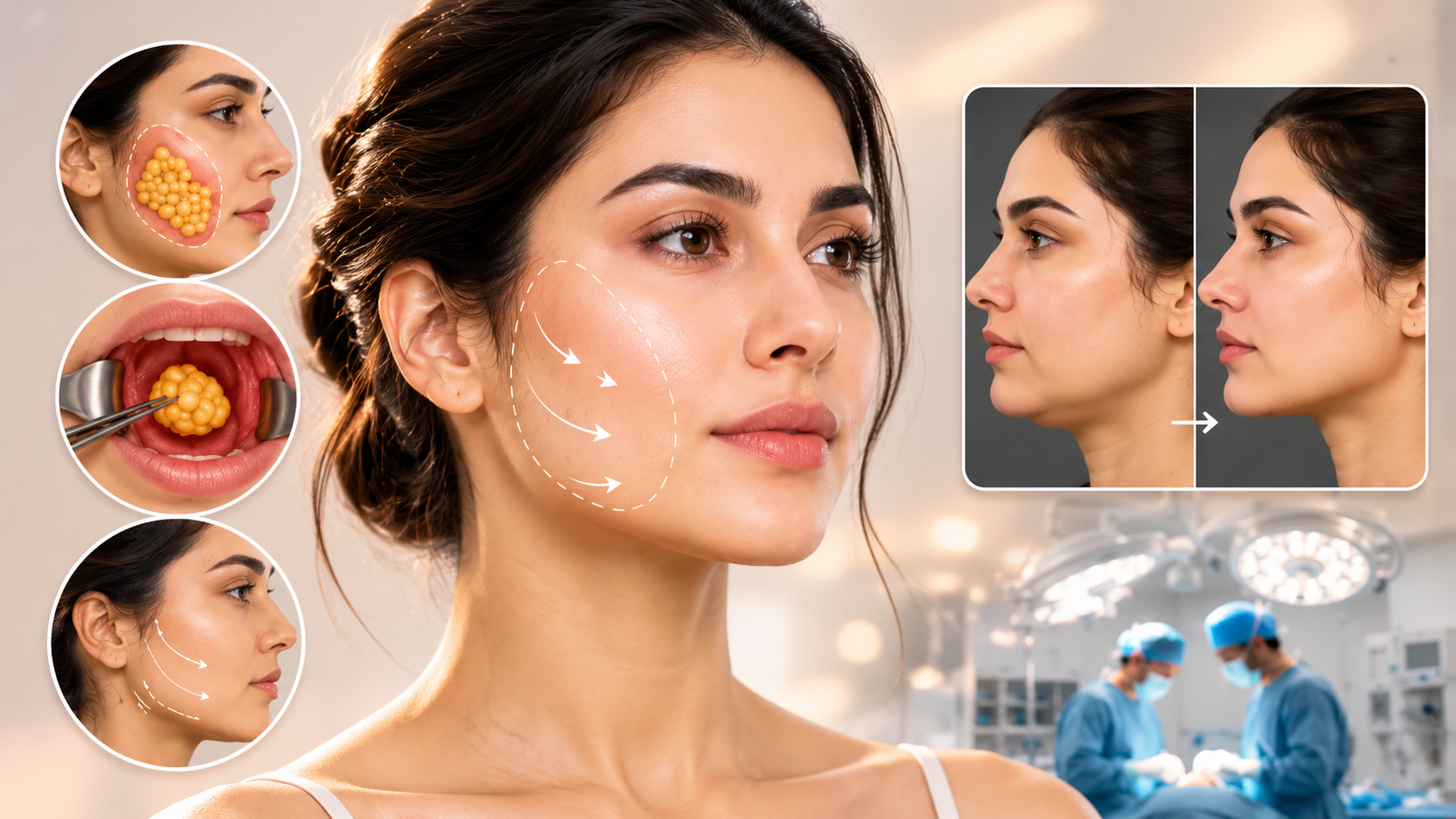
Buccal fat removal is a small surgery. The surgeon removes fat from the cheeks through a tiny cut inside the mouth. People often call it face fat removal because it slims the lower cheeks. This post answers the questions people ask most about healing.
What happens in the first few days?
Your cheeks will likely feel full and tender. The inside of your mouth may feel sore where the cut was made. Some people also feel tight when they open their mouth wide.
Swelling is the most common sign. It is the body’s normal response to surgery. It can make your face look rounder for a while, even though fat was taken out. That can feel odd, but it is part of healing.
You may also see a little bruising. Some people notice mild oozing in the mouth. Talking may feel strange while your cheeks are puffy, so give yourself time to get used to it.
Some surgeons suggest cold packs on the outside of the cheeks in the early days. Use them only if your doctor says so. Keep a thin cloth between the pack and your skin. Your surgeon will tell you what is normal and what is not.
How do you care for your mouth after surgery?
The cut is inside the mouth, so mouth care matters. Germs live in the mouth all the time. Clean habits help the cut heal well.
Your doctor will give you a plan. It often includes these steps:
- Rinse gently with the mouthwash or salt water your doctor suggests.
- Brush your teeth with a soft brush and take care near the cut.
- Take any medicine exactly as prescribed.
- Do not poke the cut with your tongue or fingers.
- Skip smoking, since it slows healing.
Some surgeons prescribe antibiotics, which are medicines that fight germs. If you get a course, finish it as directed.
Tell your surgeon about every medicine, vitamin and herbal product you take. Some of them can raise the chance of bleeding. Your surgeon can tell you which ones to stop and when.
The stitches inside the mouth are often the kind that dissolve on their own. Your surgeon will confirm what was used for you.
What can you eat and how do you rest?
Soft foods are easier on a sore mouth. Think of soup, yogurt, mashed potatoes, eggs and smoothies. Hard, crunchy or very spicy foods can hurt the cut. Very hot drinks may bother it too.
Talking and chewing may feel stiff at first. Go slowly. Small bites and small sips are enough. Drink plenty of water, and rinse your mouth after meals if your doctor has told you to.
Alcohol can mix badly with some medicines, so ask your surgeon before you drink any. Salty food can make the body hold more water, which may add to puffiness.
Rest helps. Many surgeons suggest sleeping with your head raised, which can ease swelling. Hard exercise and heavy lifting raise blood pressure in the face, so most doctors ask patients to wait before they start again. Your surgeon will tell you when it is safe for you.
When will the swelling go down?
Swelling fades in stages. The biggest change comes in the early days and weeks. Small amounts of puffiness can stay longer, and you may not notice it in the mirror at all.
The final shape of your face shows only after the swelling is gone. That takes patience. Checking the mirror every hour can make you worry for no reason. Photos taken once a week give a clearer picture of progress. Take them in the same light and from the same angle.
Avoid pressing or rubbing your cheeks to push the swelling away. Massage can help in some surgeries, but only your surgeon can say if it is right for you.
Each face heals at its own pace. Age, skin type, health and how closely you follow your care plan all play a part.
What signs mean you should call your doctor?
Most healing is smooth. Some signs need a doctor to look at you soon. Call your surgeon if you notice any of these:
- A fever.
- Pain that grows worse instead of better.
- Pus, or a bad taste or smell from the cut.
- Bleeding that does not stop.
- Swelling that is much bigger on one side.
- Numbness or trouble moving part of your face.
If you have trouble breathing or swallowing, get urgent medical help right away.
How might you feel while you wait for the result?
Many people feel unsure in the first weeks. The face looks swollen, and the slimmer shape is not visible yet. That mix can make you doubt the surgery. This is common and it often eases as the swelling goes down.
It helps to tell a friend or family member what to expect. A calm person nearby can remind you that healing takes time. If worry stays strong, call your surgeon’s office and ask. They would rather answer a small question than have you stay anxious.
How can you plan your buccal fat removal recovery?
A little planning makes the first days easier. Stock your kitchen with soft foods before surgery. Ask someone to help you at home for the first day or two. Clear your calendar for important events, since swelling can change how your face looks.
It also helps to know that this is a permanent change. The fat cells that are removed do not grow back. Faces also lose volume naturally with age. Talk with your surgeon about how your cheeks may look in the future. Not everyone is a good candidate for face fat removal, and a doctor must examine your face to tell.
Results and risks differ from person to person. A doctor must assess each case. Dr. Ashish Khare is the founder of Kalosa Cosmetic Clinic in Gurgaon. He operates in NABH-accredited facilities and shares cost details upfront, before any commitment.
Frequently asked questions
Is buccal fat removal painful?
Most people describe soreness and tightness rather than sharp pain. Your doctor can prescribe medicine to keep you comfortable.
Will there be scars on my face?
The cut is made inside the mouth, so there is no cut on the skin of the cheek. A small mark inside the mouth usually fades from view as it heals.
When can I go back to work?
It depends on your job and how you heal. Many people with desk work return sooner than people with physical jobs. Your surgeon will give you advice for your case.
Can I use a straw?
Some surgeons ask patients to avoid straws early on because sucking may strain the cut. Follow what your own doctor says.
Can I brush my teeth as usual?
Most surgeons want you to keep your mouth clean. A soft brush and gentle strokes near the cut are often advised. Your surgeon will give exact steps.
Can the fat come back?
The removed fat cells do not return. Your face can still change with weight gain, weight loss and age.
When will I see my final result?
You will see it once the swelling has settled. That takes time, and it differs for each person.
If you are thinking about this surgery, talk to a qualified doctor who can examine you and explain what recovery may look like for your face.