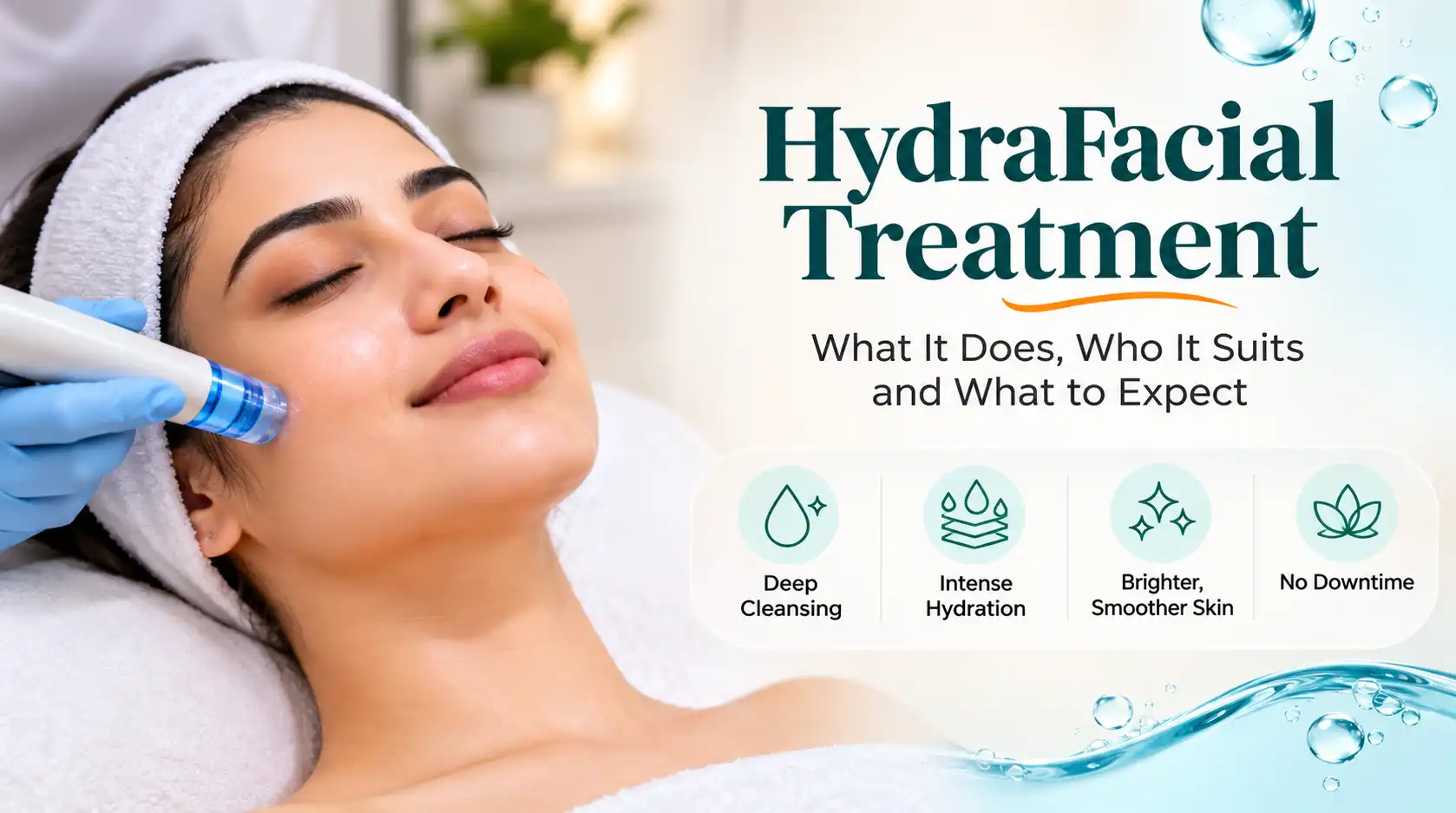
HydraFacial in Gurgaon is one of the most asked-about skin treatments in my clinic, and the honest summary is this: it is a gentle, no-surgery facial that cleans, exfoliates and hydrates the skin in one sitting. It can leave the skin looking fresher and smoother for a while, but it is a maintenance treatment, not a fix for deep wrinkles, scars or stubborn pigmentation.
Many people book it before a wedding or an event and expect a dramatic change. That expectation is where disappointment usually starts. Below I explain how a HydraFacial works, who it suits, what to expect afterwards and how it compares with other options, so you can decide whether it fits your skin and your goals.
What is a HydraFacial, and how does a session work?
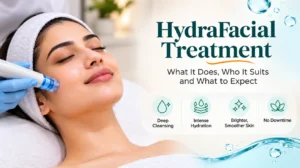
HydraFacial is the brand name of a device-based facial. It uses a handheld wand with a spiral tip that moves across the skin while delivering fluid and applying gentle suction. The idea is to loosen dead cells and surface oil, clear congested pores and then leave the skin soaked in a hydrating serum. Because it is a branded system, the exact steps and serums can differ a little from one clinic to another.
A typical session follows this order:
- Cleansing: the skin is cleaned to remove make-up, sunscreen and surface oil.
- Exfoliation: a mild acid solution loosens the top layer of dead skin cells.
- Extraction: suction from the wand helps lift blackheads and debris out of the pores.
- Hydration: the skin is infused with a moisturising serum, often one with antioxidants or peptides.
- Protection: a sunscreen is applied before you leave.
Most sessions take roughly 30 to 45 minutes. Some clinics add boosters or extra steps, which can lengthen the visit and change the cost.
People often compare it with a regular salon facial. The main difference is that cleansing, extraction and hydration happen in one device-led sequence rather than by hand, which many find more consistent. That does not turn it into a medical treatment. It is still a cosmetic facial, and the result depends on your skin and how well you look after it between visits.
Who is HydraFacial suitable for?
It tends to suit people who want healthier-looking skin without planning any downtime. These are the groups who are usually happiest with it:
- Dull or tired-looking skin that needs a refresh
- Oily or combination skin with blackheads and congested pores
- Dry, dehydrated skin that feels tight by the afternoon
- Early fine lines that look worse when the skin is dehydrated
- Anyone who wants a gentle option before an event
Men are asking for it more often too, usually for oily skin and clogged pores. The question is the same for everyone: what is your skin concern, and is a surface-level treatment enough to address it? It is also a reasonable starting point if you have never had a skin treatment and want to see how your skin responds before trying something stronger.
What HydraFacial can and cannot do
Being clear about the limits saves money and frustration. This table sums it up.
| Skin concern | What it may help with | What it will not do |
| Dullness | Removes dead surface cells so skin looks brighter | Change your skin tone permanently |
| Blackheads and clogged pores | Helps clear surface congestion | Shrink pores for good |
| Dehydration | Adds temporary moisture and softness | Replace a daily moisturiser |
| Fine lines | May soften lines caused by dryness | Treat deep wrinkles or folds |
| Acne scars and melasma | Little effect on its own | Replace peels, lasers or medical treatment |
Think of it as good skin hygiene plus hydration. It works best when it sits on top of daily sunscreen, a simple home routine and a little patience.
Who should wait or avoid it
HydraFacial is gentle, but it is not right for every skin on every day. Please speak to a doctor first, or postpone the session, if any of these apply:
- Active, inflamed acne with pustules or cysts, or an active cold sore
- Sunburn, open wounds or a rash on the treatment area
- Recent use of oral isotretinoin, which can make the skin fragile
- Strong retinoids or acids that have left your skin raw or peeling
- A known allergy to an ingredient in the serums
- Pregnancy, because some acids and boosters may not be suitable
Tell the practitioner about every cream, tablet and procedure you have used in the last few weeks. People often forget to mention retinoids, and that is exactly the detail that matters.
What to expect before and after the session, and how often to repeat it
Before your appointment
Avoid strong sun exposure and tanning for a few days beforehand, and skip waxing or scrubbing the face. If you use retinoids or exfoliating acids, ask whether you should pause them. Arrive with a clean, make-up free face if you can.
Right after the treatment
Most people go back to normal activities straight away. Mild pinkness or a slight tight feeling can appear and usually settles within hours, although sensitive skin may take a day. Some people feel a mild sting during exfoliation or a pulling sensation during extractions.
Simple aftercare
- Use a gentle cleanser and a plain moisturiser for the next day or two
- Apply sunscreen every morning and reapply if you are outdoors
- Skip strong acids, scrubs and retinoids for a few days unless your doctor says otherwise
- Do not pick at pores that were treated
- Avoid very hot showers and saunas on the first day
How often should you repeat it?
There is no single schedule. Many people choose a session every few weeks to every couple of months, depending on skin type, budget and the look they want. The results are temporary because the skin keeps renewing itself, so your routine at home matters more than any one visit. A doctor can suggest a pace after looking at your skin.
HydraFacial versus peels, microneedling and lasers
HydraFacial sits at the gentler end of skin treatments. If your concern goes deeper than surface texture and hydration, another option may serve you better.
- Chemical peels use stronger acids and can help with uneven tone, but they usually mean some peeling and more careful aftercare.
- Microneedling triggers the skin’s repair response and is often considered for scars and texture.
- Lasers target specific problems such as pigmentation or marks. Our guide to laser skin treatment explains the types and what sessions involve.
- PRP uses plasma from your own blood and is another route for improving skin quality.
Sometimes these are combined over time, with HydraFacial used for upkeep between stronger sessions. For a wider look at your choices, see our page on anti-ageing treatment in Gurgaon.
Choosing a clinic for HydraFacial in Gurgaon
Because it is called a facial, people sometimes book it casually. I would still suggest asking a few questions first:
- Who will perform the treatment, and what is their training?
- Is the device a genuine HydraFacial system, and are the wand tips fresh for each client?
- Will someone assess your skin first, or does everyone get the same facial?
- Are the serums and boosters explained, with the full cost stated in advance?
- Is a doctor available if your skin reacts?
The cost varies with the clinic, the boosters you choose and how many sessions you book, so any figure should be confirmed after a consultation. You can read about the service on our HydraFacial treatment page.
When to call your doctor
Most reactions are mild, but do not wait if something feels wrong. Contact your doctor or the clinic if you notice:
- Redness, burning or swelling that gets worse after the first day or two
- Blisters, oozing or crusting on the skin
- Hives or itching spreading across the face or body
- A cold sore appearing after the session
- Pain that is increasing instead of settling
If your lips, eyes or throat swell quickly, or you have trouble breathing, treat it as an emergency and get urgent medical care.
Frequently asked questions
Is HydraFacial safe for all skin types?
It is designed to be gentle and is used on many skin types, but suitability depends on your skin and health history. Active infections, very reactive skin and certain medicines can make it a poor choice, so a quick assessment first is sensible.
Does a HydraFacial hurt?
Most people describe it as comfortable, with a mild tingling or suction feeling. Sensitive skin may feel more, and extractions can be uncomfortable on congested areas. Tell your practitioner if anything is too much.
When will I see results?
Many people notice a fresher, more hydrated look right after the session. That glow is not permanent, and how long it lasts varies with skin type and daily care.
Can a HydraFacial remove acne scars or pigmentation?
Not on its own. It may improve the overall look of the skin, but scars and stubborn pigmentation usually need stronger treatments. A doctor can help you choose the right approach for your skin.
Can I wear make-up afterwards?
Many clinics say light make-up is fine later the same day, but it is kinder to let the skin rest. Follow the advice you are given after your own session.
If you are unsure whether HydraFacial or something stronger is right for your skin, you are welcome to come in for a consultation with Dr. Ashish Khare. We will look at your skin, listen to what you want and explain your options plainly, with no pressure to book anything.
This article is general information and is not a substitute for a personal medical assessment.