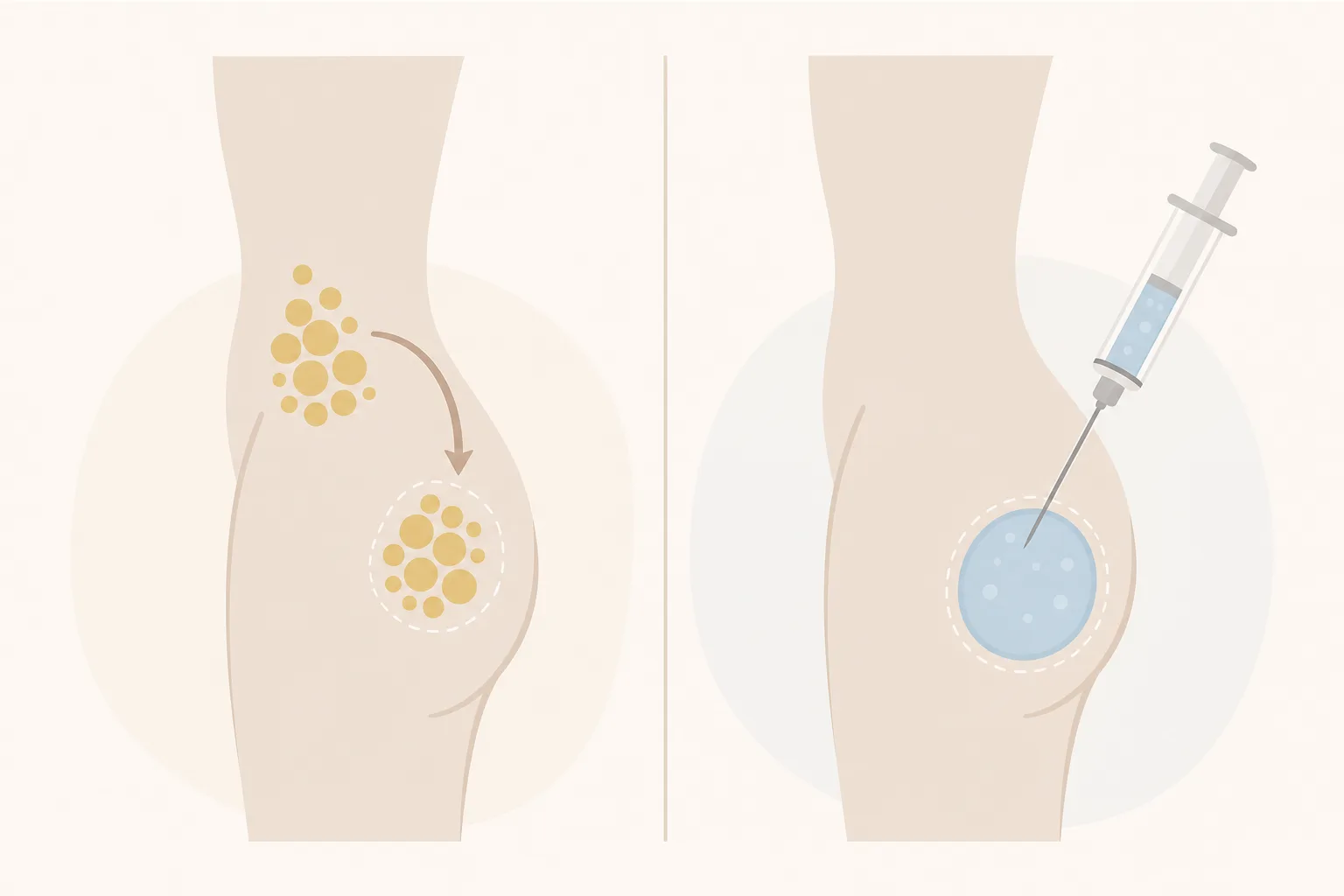
Dermal filler treatment uses soft gel injected under the skin to restore volume, smooth lines, or reshape features such as the lips, cheeks, and chin. If you are considering fillers in India, you probably want to know three things: what they can change, how long they last, and what can go wrong.
I will answer each of those here, along with what a sensible consultation looks like. Fillers are a minor procedure, but they still need medical judgement, good anatomy knowledge, and a careful choice of product.
What is a dermal filler?
Most fillers used today are made of hyaluronic acid, a substance the body already produces in the skin. It holds water, which gives the gel its soft, cushioning quality. Other types of filler exist, some designed to stimulate collagen or to give firmer structure, but hyaluronic acid products are the most common because they can be dissolved if needed.
That last point matters. If you or your doctor are unhappy with the result, hyaluronic acid filler can usually be broken down with an enzyme injection. Not all fillers offer that option.
Where fillers are commonly used
| Area | What filler can do | Things to keep in mind |
| Under-eye hollows | Soften a tired, hollow look | A delicate area; needs an experienced injector |
| Cheeks | Restore lost volume and support | Overfilling can look heavy |
| Lips | Add shape and moderate volume | Natural results come from small amounts |
| Nasolabial folds | Soften lines from nose to mouth | Often better with cheek support as well |
| Chin and jawline | Improve balance and definition | Not a substitute for surgery in some cases |
Fillers can also be used for the back of the hands and in other areas, depending on the product and the doctor’s experience.
How the treatment is done
A typical visit follows a clear order.
- You discuss what bothers you and what you hope to change. Photographs are taken.
- Your face is assessed from several angles, since volume loss in one area often shows up as a line in another.
- The skin is cleaned and a numbing cream may be applied. Many products already contain a local anaesthetic.
- The filler is injected with a fine needle or a blunt cannula in small amounts.
- The doctor checks symmetry, and you are given aftercare instructions.
Most sessions take between thirty minutes and an hour. You can usually return to normal activity the same day, although swelling or bruising may show for a few days.
How long do fillers last?
There is no single answer. Duration depends on the product, the area, your metabolism, and how much was used. Softer products in mobile areas such as the lips usually fade sooner. Firmer products in areas with less movement tend to last longer. Many hyaluronic acid fillers last several months to a couple of years.
The body slowly breaks the gel down, so results are temporary. Some people prefer this, since it allows adjustments as the face changes with age.
Who is a good candidate?
Fillers suit adults who have lost volume, who have static lines, or who want mild reshaping without surgery. They suit people who understand that the result is subtle and that touch-ups are part of the process.
Fillers may not be the right choice if you are pregnant or breastfeeding, if you have an active skin infection in the area, or if you have certain autoimmune or bleeding conditions. Tell your doctor about all medicines and supplements, including blood thinners and fish oil.
Risks and side effects
Common effects are temporary and settle on their own:
- Swelling and tenderness at the injection points.
- Bruising, which can last up to a week or more.
- Small lumps that soften over the following days.
- Mild asymmetry that can be corrected at a review visit.
Rarer problems include infection, allergic reactions, and the formation of nodules. The most serious complication is filler entering a blood vessel, which can block blood flow to the skin and, very rarely, affect vision. This is why anatomy knowledge, technique, and having a plan for emergencies matter so much. It is also the reason I advise against having fillers done by someone who is not a qualified doctor.
Aftercare in the first few days
- Avoid pressing or massaging the area unless you are told to.
- Skip intense exercise, saunas, and heavy alcohol for about a day or two.
- Sleep with your head slightly raised if you feel swelling.
- Use cold compresses gently for comfort, and avoid other facial procedures for a couple of weeks unless advised.
When to call your doctor
Call the clinic promptly if you notice any of these after a filler session:
- Severe pain, or skin that turns pale, grey, or blotchy.
- Any change in your vision.
- Spreading redness, warmth, or fever.
- A hard, tender lump that is getting bigger.
Choosing a product and a doctor
Ask which filler will be used, whether it is a genuine product in a sealed pack, and why that product suits the area. Different gels have different firmness. A soft gel moves well in the lips, while a firmer one gives structure to the chin. Check the batch details on the pack and keep a record of them, since they matter if you ever need follow-up care.
Also ask who will be injecting. Fillers sit close to blood vessels and nerves, and the person holding the syringe should know the anatomy of the face well and be able to manage a complication if one occurs. A clinic that is comfortable answering these questions is a good sign. Be wary of very low prices, since the cost of a genuine product and of proper training is rarely small, and a bargain offer can mean a compromise somewhere in the process.
Filler or surgery?
Fillers are good for volume loss and mild shaping. They are less suited to heavy skin laxity, deep jowls, or major structural issues. In those cases a surgical option such as a facelift, or a procedure that tightens the skin, may give a more lasting result. Sometimes the right answer is a mix: surgery for the foundation and filler for fine tuning later.
An honest consultation should include the option of not treating at all, if what you want is not something filler can deliver.
Frequently asked questions
Will filler make me look overdone?
Not if the amount is measured and the plan fits your face. Starting conservatively and adding at a review visit is usually the safer approach.
Can fillers be removed?
Hyaluronic acid fillers can generally be dissolved with an enzyme injection. This is one reason many doctors prefer them.
Are fillers the same as Botox?
No. Fillers add volume. Botulinum toxin relaxes muscles that cause expression lines. Some people benefit from a combination, and your doctor can explain which fits.
How soon can I see results?
You can see a difference straight away, though swelling may hide the final look. The result usually settles in one to two weeks.
If you would like to talk through fillers or other non-surgical options, you are welcome to book a consultation with Dr. Ashish Khare. He will look at your face, explain what is realistic, and tell you if another approach would suit you better.
This article is general information and not a substitute for a personal medical assessment.