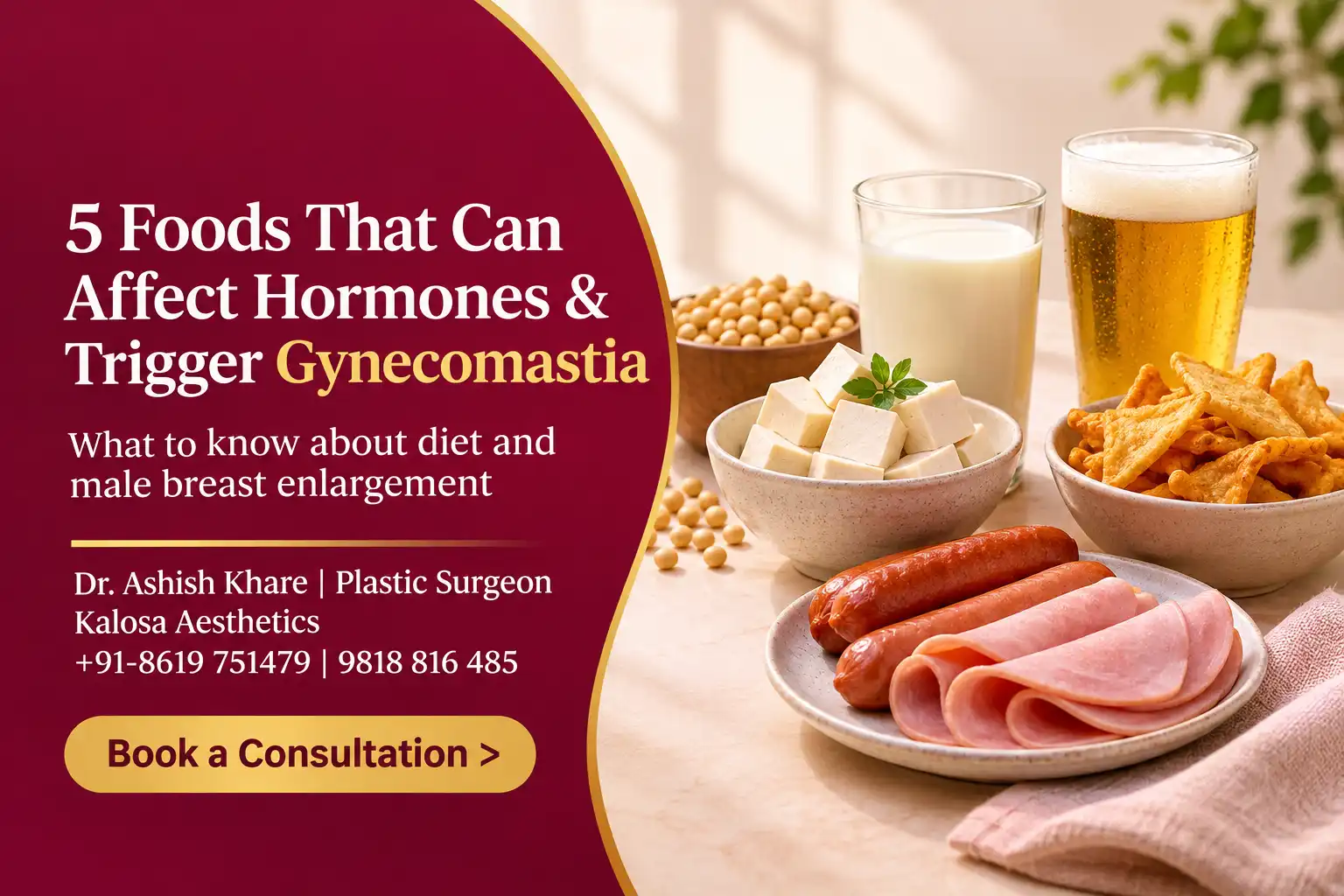
Foods that cause gynecomastia is a question I hear almost every week in clinic. The short answer: food alone rarely causes enlarged male breasts, but a few foods and drinks can nudge your hormones or your body fat in the wrong direction. Diet is one factor among many, and it is seldom the main one.
In this article I will walk through five foods people often ask about, what is actually known, what is only a theory, and what you can sensibly do. If you already have firm, long-standing glandular tissue, no diet will remove it, and that is worth knowing early.
How gynecomastia actually develops
Gynecomastia means growth of the glandular tissue behind the nipple in men. It usually happens when the balance between oestrogen and testosterone shifts. Puberty, ageing, certain medicines, liver or thyroid problems, steroid or supplement use and weight gain are all known triggers.
It is different from simple chest fat, which is common in men who carry extra weight. If you want to understand the basics first, our page on what is gynecomastia explains the difference clearly.
Can food cause gynecomastia?
Food can influence hormones in small ways, and it can change how much fat your body stores. Fat tissue converts testosterone into oestrogen, so gaining weight can worsen a hormonal imbalance. That is the most reliable link between diet and male breast enlargement.
What we do not have is strong proof that eating one particular food causes true gynecomastia in an otherwise healthy man. Most claims you see online are based on small studies, animal research or case reports. I would treat them as reasons to be sensible, not reasons to panic.
5 foods and drinks people link to gynecomastia
1. Soy products
Soy contains phytoestrogens, plant compounds that can weakly mimic oestrogen. Moderate soy in dal, tofu or soy chunks is not known to harm most men. A few case reports describe breast enlargement in men with a very high daily soy intake, so large amounts of soy protein powder or soy milk every day deserve a second thought.
2. Alcohol, especially beer
Regular heavy drinking can affect the liver, and the liver helps clear oestrogen from the body. Alcohol also tends to lower testosterone and add calories. Beer has the extra reputation of containing hops, which have plant oestrogen-like compounds, though the evidence there is thin.
3. Fried, sugary and ultra-processed foods
These foods do not act on hormones directly. Their effect is through weight gain. More body fat means more oestrogen production and a fuller-looking chest, so the problem often becomes both glandular and fatty tissue together.
4. Dairy and milk products
Milk contains small amounts of natural hormones, and some people worry about hormone use in dairy farming. Research on this link to male breast tissue is limited and inconclusive. If you drink a normal amount of milk, curd or paneer, there is no solid reason to cut it out for this purpose alone.
5. Flaxseed and other seeds in large quantities
Flaxseed is one of the richest dietary sources of lignans, another type of phytoestrogen. A spoonful in your roti or smoothie is unlikely to matter. Daily large amounts as a health fad are a different situation, and it is reasonable to mention them to your doctor.
Quick comparison: what is known and what is not
| Food or drink | Possible mechanism | Strength of evidence |
| Soy (high intake) | Plant oestrogens | Limited, mostly case reports |
| Alcohol (heavy use) | Liver load, lower testosterone | Reasonable for heavy drinking |
| Fried and processed foods | Weight gain, more oestrogen | Indirect but well understood |
| Dairy | Natural hormones in milk | Weak and inconclusive |
| Flaxseed (large amounts) | Lignans | Limited |
Other causes that matter more than diet
When a man comes in worried about his chest, I look at the whole picture before I ask about food. Several things are far more likely to be responsible:
- Medicines: some drugs for ulcers, heart conditions, prostate problems, anxiety and others can cause breast enlargement.
- Steroids and supplements: anabolic steroids and some bodybuilding products are a common cause in young men.
- Medical conditions: liver disease, kidney problems, an overactive thyroid and low testosterone can all play a part.
- Weight gain: extra body fat shifts the hormone balance and adds volume to the chest.
- Puberty and ageing: both involve natural hormone changes, and many cases settle on their own.
Our guide on how to know if you have gynecomastia covers the signs and what to check.
What you can sensibly do with your diet
You do not need a strict plan. A few steady habits are enough:
- Aim for a healthy body weight through regular activity and balanced meals.
- Keep alcohol low, and avoid binge drinking.
- Cut back on deep-fried snacks and sugary drinks.
- Eat soy and seeds as part of normal meals, not as concentrated daily supplements.
- Check the label of any protein powder or supplement, and avoid products that make hormone claims.
These changes are good for your general health anyway. If your chest is mainly fat, you may see it soften over several months. If it is mainly glandular tissue, it often stays the same.
When diet changes are not enough
Glandular tissue that has been present for more than a year or two tends to become firm and fibrous. At that stage it usually does not respond to diet, exercise or home remedies. Surgery is then the option that actually removes the tissue, and the approach depends on how much gland and fat is present. You can read more on gynecomastia surgery in India.
When to see a doctor
Please get checked rather than guess if you notice any of these:
- A hard, one-sided or irregular lump in the breast.
- Pain, tenderness or nipple discharge, especially bloody discharge.
- Skin changes, dimpling or redness over the breast.
- Rapid growth over a few weeks.
- Other symptoms such as fatigue, reduced sex drive or testicular changes.
Most cases are harmless, but a proper examination and, if needed, blood tests or imaging will tell you what is going on.
Frequently asked questions
Does drinking milk cause gynecomastia?
There is no strong evidence that normal milk intake causes it. Research is limited, so it is not a reason to stop dairy on its own.
Is soy bad for men?
Moderate soy in regular meals is generally considered fine. Very high daily intake, such as large amounts of soy protein shakes, may be worth discussing with your doctor.
Can I reduce gynecomastia by diet alone?
If the swelling is mostly fat, weight loss can help. If it is true glandular tissue, diet usually will not remove it.
Which foods are good if I am worried about my hormones?
A balanced diet with vegetables, fruit, pulses, adequate protein and limited alcohol supports general hormonal health. No single food fixes gynecomastia.
Should I stop my medicines if I think they are the cause?
No. Please speak to the prescribing doctor first, as stopping some medicines suddenly can be harmful.
A final word
If you are worried about your chest, a short consultation can sort out whether the cause is hormonal, medicine-related, weight-related or something else. You are welcome to meet Dr. Ashish Khare for an honest assessment and a discussion of options, with no pressure to decide anything on the day.
This article is general information and not a substitute for a personal medical assessment.